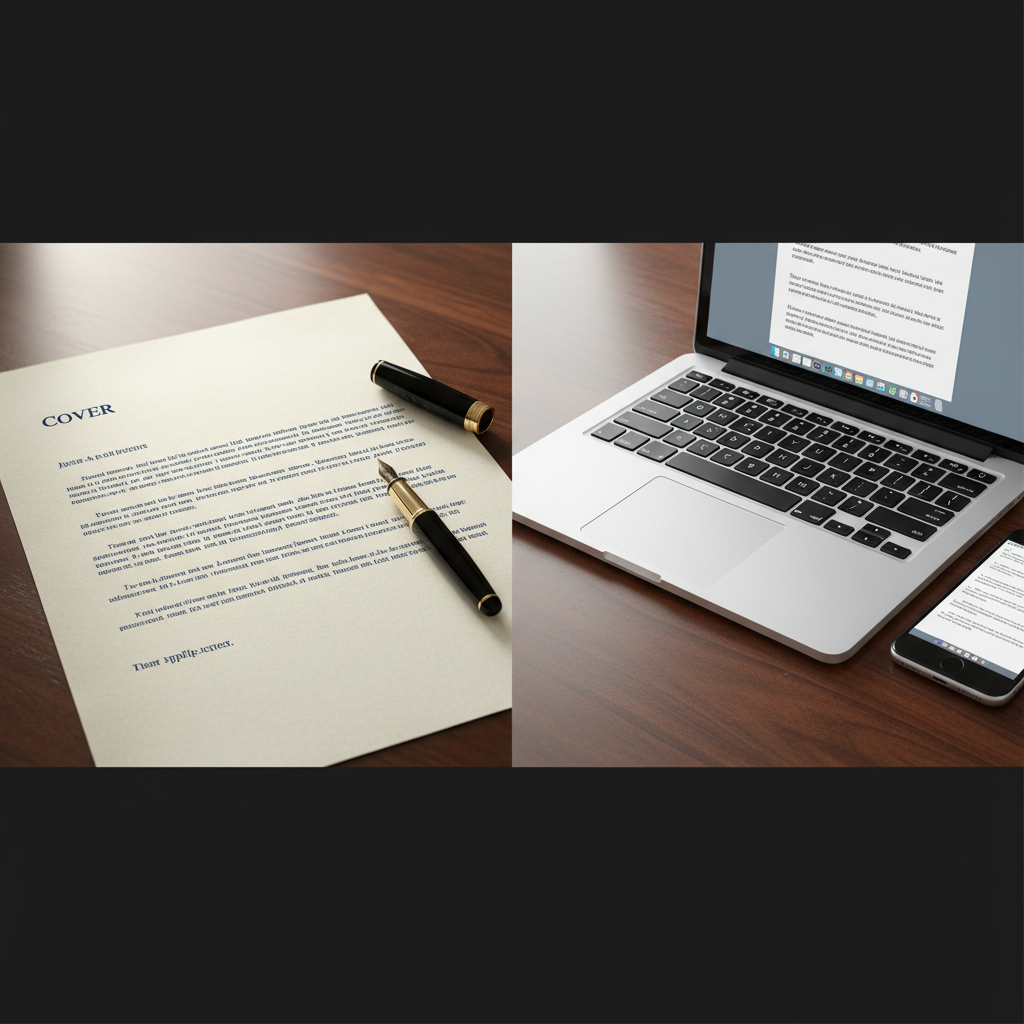
The modern job search has transformed significantly. Gone are the days when a neatly typed, physically mailed cover letter was the norm. Today, digital applications reign supreme, making the email cover letter the primary means of introduction for most job seekers. While the underlying purpose remains the same—to introduce yourself, express interest, and highlight relevant qualifications—the format, approach, and best practices have evolved.
Understanding the nuances between a traditional print cover letter and its digital email counterpart is crucial for navigating today's competitive hiring landscape successfully. This guide will explore these differences, equip you with actionable strategies, and help you master the art of the modern cover letter.
What is a Traditional Cover Letter?
A traditional cover letter is a formal business letter, typically one page in length, printed on paper. It adheres to a classic letter format, including a sender's address, date, recipient's address, a formal salutation, body paragraphs, a professional closing, and a handwritten signature. Historically, these letters were physically mailed or submitted in person with a resume. Their structure allowed for a more detailed narrative, often providing a comprehensive overview of a candidate's qualifications and enthusiasm for a role. While less common in most sectors today, understanding its foundational elements helps appreciate the evolution into its digital form.
What is an Email Cover Letter?
An email cover letter is a digital document that serves the same purpose as its traditional predecessor but is delivered directly within an email. Instead of an attachment that needs to be opened, the core message and argument for your candidacy are presented in the body of the email itself. This format demands conciseness, scannability, and directness, as recruiters often quickly scan emails on various devices. The email includes a clear subject line, a professional greeting, concise paragraphs highlighting your fit, a call to action, and a professional email signature.
It's the standard method for virtually all online job applications, making its mastery indispensable for modern job seekers. Sometimes, the email itself acts as a brief intro, directing the reader to an attached formal cover letter, but often, the email is the cover letter, eliminating the need for a separate attachment.
Key Differences: A Comparative Analysis
The shift from traditional to email cover letters brings several critical distinctions:
- Medium & Delivery: Traditional letters are physical, mailed, or hand-delivered. Email cover letters are digital, transmitted instantly, and accessible globally.
- Format & Structure: Traditional letters follow a strict business letter layout with specific address blocks and a formal sign-off. Email cover letters adopt a more streamlined email format, where the subject line is paramount, and the body text needs to be immediately engaging.
- Length & Conciseness: While both should be concise, email cover letters demand even greater brevity. Recruiters often scan emails on the go, making short, punchy paragraphs and clear calls to action essential. Traditional letters might allow for slightly more narrative detail, though still aiming for one page.
- Attachments vs. Body Text: In many email applications, the email body is the cover letter. When a separate cover letter document is required, the email acts as a brief introduction, directing the hiring manager to the attached file. Traditional letters are almost always accompanied by a resume, but the letter itself is a standalone document.
- Immediacy & Tracking: Emails are instantaneous, allowing for rapid application submission. Many email platforms also offer tracking features, indicating when an email has been opened, providing some insight into the application's journey.
- Visual Presentation: Traditional letters rely on paper quality and precise formatting. Email letters depend on clear text, simple formatting, and professional email etiquette for visual appeal.
Crafting an Effective Email Cover Letter: Best Practices
Mastering the email cover letter requires a strategic approach:
-
Compelling Subject Line: This is your first impression. Make it clear, concise, and informative. Include your name, the job title, and the job reference number if applicable.
- Example: "Application: [Your Name] - [Job Title] - Job ID #[XXXX]"
- Example (Referral): "Referral from [Referral's Name]: [Your Name] - [Job Title] Application"
-
Personalized Salutation: Always address the hiring manager by name if possible. If not, use a professional general greeting. Avoid "To Whom It May Concern."
- Example: "Dear Mr. Smith," or "Dear [Company Name] Hiring Team,"
-
Concise Opening Paragraph: Immediately state the position you're applying for and where you saw the advertisement. Briefly express your enthusiasm and a key reason why you're a good fit.
- Example: "I am writing to express my strong interest in the [Job Title] position at [Company Name], as advertised on [Platform]. With X years of experience in [relevant field] and a proven track record in [key skill], I am confident I can make significant contributions to your team."
-
Targeted Body Paragraphs: This is where you connect your skills and experiences directly to the job requirements. Use 1-2 paragraphs to highlight 2-3 key accomplishments or skills, backed by specific examples and quantifiable results where possible. Refer to the job description frequently.
-
Strong Call to Action: Reiterate your interest and express eagerness for an interview.
- Example: "Thank you for considering my application. I have attached my resume for your review and welcome the opportunity to discuss how my qualifications align with your needs in an interview."
-
Professional Closing & Signature: Use a formal closing followed by your full name, phone number, email address, and LinkedIn profile URL.
- Example: "Sincerely, [Your Full Name] | [Phone Number] | [Email Address] | [LinkedIn Profile URL]"
-
Review Attachments: If the job requires a resume and/or separate cover letter as attachments, ensure they are correctly named, in the specified format (usually PDF), and actually attached before sending. Always mention attachments in the email body.
-
Proofread Meticulously: Typos and grammatical errors can instantly undermine your professionalism. Read through your email multiple times, and consider using a spell-checker or asking a trusted friend to review it.
When to Use Which?
In the vast majority of cases, an email cover letter is the appropriate and expected method of application. This applies to online portals, direct email submissions, and professional networking applications. Traditional paper cover letters are now a rarity, typically reserved only for very niche industries, highly formal executive roles, or specific instructions from a recruiter or hiring manager. If a job posting explicitly requests a physical mailing, adhere to those instructions, but otherwise, default to a well-crafted email.
Common Mistakes to Avoid
Even with the digital shift, some pitfalls remain common:
- Generic Content: Sending the same letter to multiple companies demonstrates a lack of genuine interest. Always customize.
- Poor Subject Line: A vague or empty subject line might lead your email to be overlooked or sent to spam.
- Too Long or Too Short: Email cover letters should be concise but informative. Avoid overly brief emails or lengthy paragraphs that are hard to read.
- Grammar and Spelling Errors: These reflect poorly on your attention to detail. Proofread rigorously.
- Unprofessional Email Address: Stick to a professional email address (e.g., firstname.lastname@email.com).
- Forgetting Attachments: If you mention attachments, ensure they are actually there before hitting send.
- Poor Formatting: Avoid large blocks of text. Use short paragraphs and ample white space for readability.
Conclusion
The transition from traditional paper cover letters to their email counterparts reflects the broader digital evolution of the professional world. While the core objective of showcasing your suitability for a role remains unchanged, the presentation and delivery methods have been fundamentally reshaped. By understanding these distinctions, embracing modern best practices for crafting compelling email cover letters, and meticulously tailoring each application, job seekers can significantly enhance their chances of making a strong first impression and securing that coveted interview. Master the email cover letter, and you'll unlock a powerful tool in your career advancement arsenal.